
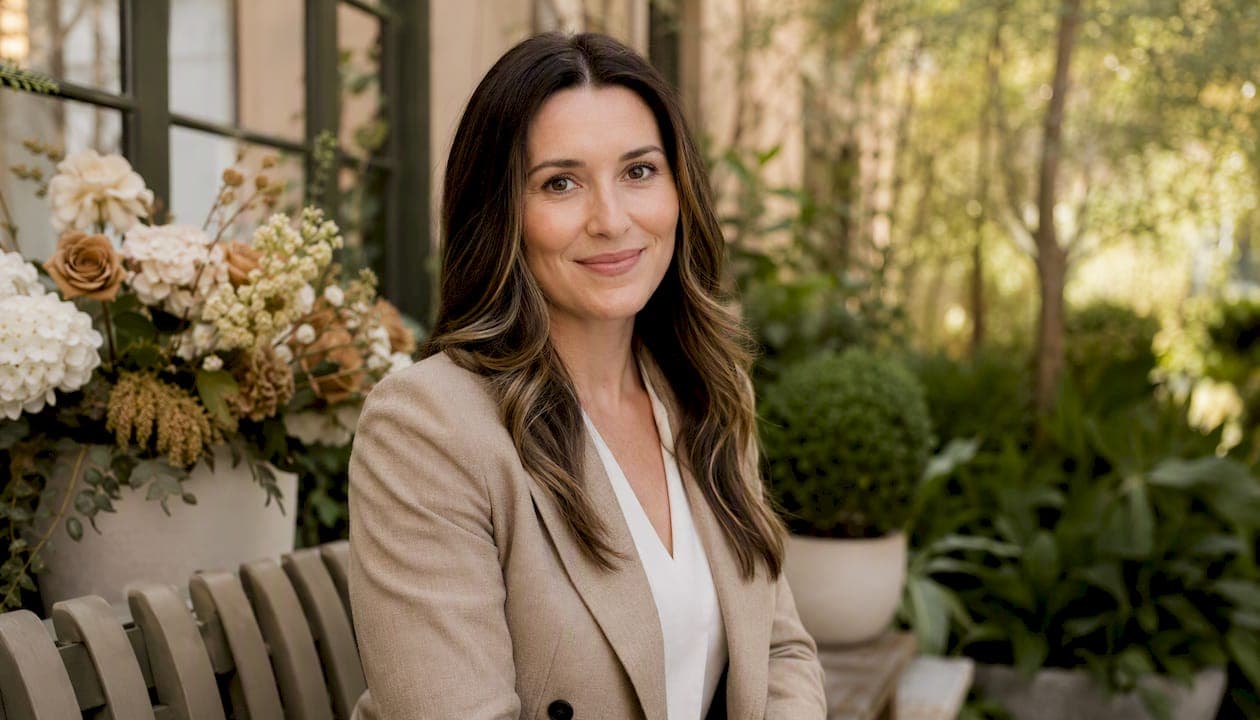
The best corporate headshot poses come down to three mechanics: chin forward and slightly down, shoulders rotated 15 to 30 degrees from square-on, and your weight settled on your back foot. Get those right and the pose almost sets itself, whatever expression you choose. Add a role-appropriate expression, whether that’s an easy smile or a calm, level gaze, and you’ve got a shot that reads as professional rather than posed.
Here’s what to memorise before you step in front of a lens:
-
Standard three-quarter — shoulders rotated 20°, chin forward, eyes into the lens
-
Arms crossed — confident stance, weight on back foot, jaw relaxed
-
Seated engaged — perch on the front two-thirds of the chair, lean from the hips
-
One hand in pocket — thumb out, elbow soft, not locked
-
Desk lean — forearms resting lightly, shoulders still rotated
-
Hand to chin — light contact only, no pressing into the skin
-
Open-shoulder friendly — square torso softened with a slight tilt
-
Authoritative neutral — spine tall, minimal smile, direct eye line
-
Relaxed creative — asymmetric stance, natural half-smile
Key Takeaways
Reliable corporate headshots come from three repeatable mechanics, chin forward, 15 to 30 degree shoulder rotation, and back-foot weight, paired with an expression matched to your role.
| Point | Details |
|---|---|
| Master the core mechanics | Chin forward and down, shoulders rotated 15 to 30°, and weight on the back foot fix most stiff poses. |
| Choose expression by role | A soft smile suits client-facing roles; a calm neutral suits leadership and legal bios. |
| Solve hands with one habit | Keep hands relaxed and slightly away from the torso, whether pocketed, clasped, or resting on a surface. |
| Dress and groom simply | Solid colours, well-fitted clothing, and matte makeup translate best under studio lighting. |
| Book a guided session | Squire-squire offers studio and on-location headshots in Warwickshire with flexible and same-day booking. |
Table of Contents
Nine corporate headshot poses worth practising
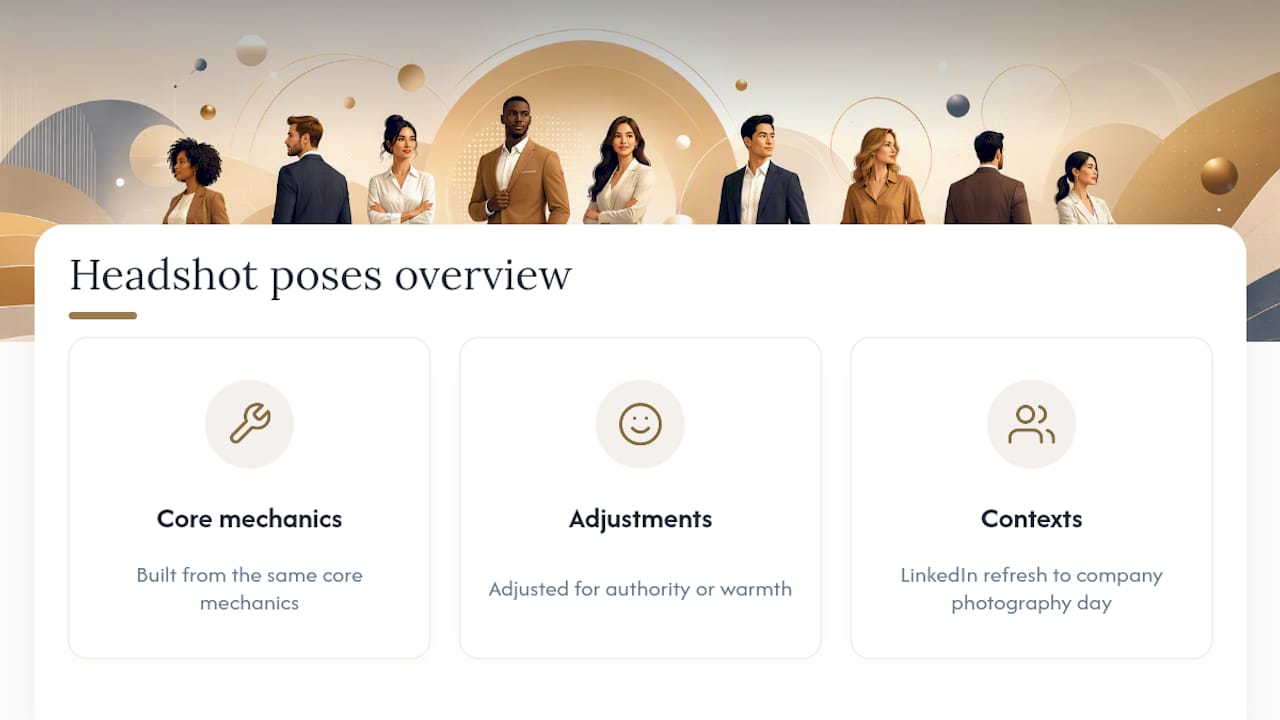
These nine cover almost every business context, from a LinkedIn refresh to a full company photography day. Each one is built from the same core mechanics, adjusted for how much authority or warmth the shot needs to convey.
1. Standard three-quarter
Rotate your chest 10 to 30 degrees off camera, bring your chin gently forward, and let your eyes meet the lens directly. It works for almost any industry, which is why photographers default to it as the safe, versatile choice. Sales and client-facing roles benefit from a slightly warmer version, with a touch more smile in the eyes.
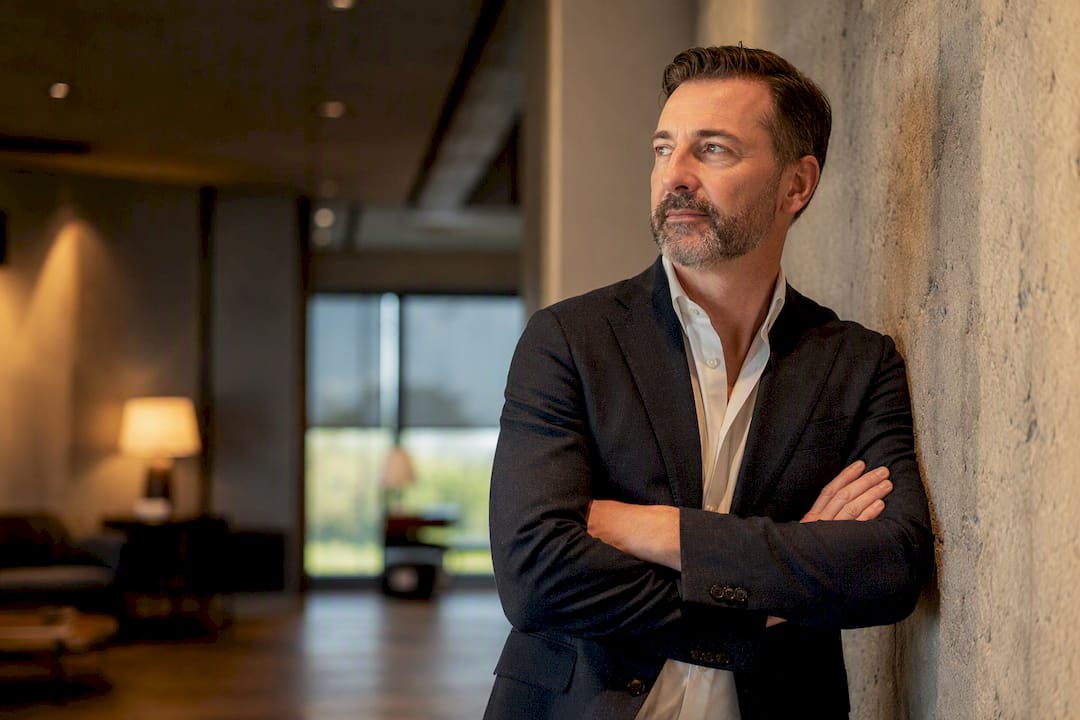
2. Arms crossed, confident
Cross your arms loosely, weight on the back foot, shoulders still angled rather than square to the camera. Executives use this pose often because it reads as settled rather than defensive, provided the jaw stays soft. Watch for clenched forearms; that’s the giveaway that turns confidence into rigidity.
3. Seated, engaged
Sit on the front two-thirds of the chair and lean forward from the hips, not the shoulders. Feet flat, or one slightly behind the other for balance. This suits desk-based professionals and creatives who want a slightly less formal, more approachable frame.
4. One hand in pocket
Thumb outside the pocket, elbow soft rather than locked straight. It gives the arms somewhere natural to go, which solves the single biggest problem most people have in front of a camera. Avoid pushing the whole hand deep in; that pulls the shoulder out of alignment.
5. Desk lean
Forearms rest lightly on a surface, weight distributed rather than dumped forward. Works well for authoritative neutral shots where you want to suggest competence without stiffness. Creative professionals can loosen this further with a slight head tilt.
6. Hand to chin
Light fingertip contact only, never a full palm press into the jaw. This pose photographs well for thoughtful, consultative roles but collapses fast if the hand does any real work holding the head up.

7. Open-shoulder, friendly
Soften a square-on stance with a gentle tilt through the shoulders. Sales and hospitality roles lean into this because it reads as open and welcoming rather than guarded.
8. Authoritative neutral
Spine tall, chin level, minimal smile, direct eye line. Best for leadership bios and formal company directories where gravitas matters more than warmth.
9. Relaxed creative
Asymmetric stance, weight shifted, natural half-smile. This is the loosest pose on the list and suits founders and creative directors who want personality over polish.
Pro Tip: Book a single direction into your head before the shutter clicks: “60% of your weight on the back foot,” not “how do you want to stand?” Photographers who give one specific instruction rather than a menu of options get more natural results, because the subject stops thinking and starts adjusting.
The posing fundamentals behind every good headshot
Every pose above rests on the same four fundamentals: chin position, shoulder angle, weight distribution, and eye placement in the frame. Miss any one and the whole pose looks slightly off, even if you can’t say why.
-
Keep the spine tall but relaxed, never braced or arched
-
Rotate the chest 10 to 30 degrees off camera rather than facing it square on
-
Move your chin forward and very slightly down to sharpen the jawline
-
Place your eyes in the upper third of the frame, following the rule of thirds
Pro Tip: Practise the chin-forward move in a mirror for thirty seconds before your session. It feels exaggerated close up but reads as natural once the camera compresses the angle.
What to do with your hands during a headshot
Hands cause more stiffness than any other part of a corporate headshot. Relaxed hands sit a small distance from the torso, whether that’s one hand loosely in a pocket, a light clasp at waist height, or resting flat on a desk.
-
Avoid clenched fists or arms glued tightly to your sides
-
Angle glasses very slightly to prevent lens glare and reflection
-
Keep jewellery minimal so it doesn’t catch light or distract from the face
-
Hold a folder or pen with a light grip, resting rather than gripping, so it reads as a natural prop rather than a fidget
Getting a natural, professional expression
A small, real smile or a calm neutral expression with softened eyes works for most roles; match the intensity to how your industry presents itself. Leadership and legal roles often suit the calmer neutral, while sales and client-facing roles benefit from genuine warmth.
-
Exhale slowly before the shot to drop tension from your shoulders and jaw
-
Think of something that made you laugh recently rather than forcing a grin
-
Soften your jaw deliberately, since most stiffness in a headshot lives there, not in the eyes
-
Respond naturally when a photographer says something like “give me a small squinch” or “relax your eyes downward for a second and back up”
Clothing, grooming and makeup for headshots
Choose solid colours over busy patterns, and pick clothing that fits the way you actually dress for work, not a costume version of it. Fit matters more than brand.
-
Solid, mid-tone colours photograph better than bold prints or fine stripes
-
Well-fitted collars, tailored jackets and minimal jewellery keep attention on the face
-
Clean, simple hair styling that matches your everyday look reads as more credible than something styled specifically for the camera
-
For makeup, matte finishes photograph best under studio lighting; match foundation to your neck tone and skip heavy shimmer or false lashes
The 2 to 3 rule is worth knowing here: focus real effort on two of hair, makeup, and outfit, rather than trying to overhaul all three at once. If you want a genuinely polished result and don’t wear makeup often, hiring a specialist for the morning of the shoot removes a lot of guesswork.
Phone headshots versus a professional studio session
A studio session gives you consistent lighting, a proper lens, and retouching options a phone can’t match. A phone can still work for a quick LinkedIn refresh if you control the light, distance, and crop carefully.
-
Studio lighting setups, often a clamshell arrangement with an 85 to 135mm lens, avoid the flattening and reflections common on phone cameras
-
If shooting on a phone, step back and zoom in slightly to avoid wide-angle distortion, and keep your eyes in the upper third of the frame
-
Use soft, indirect natural light rather than direct sun or overhead ceiling lights
What to expect at a professional headshot session
Most professional sessions run 20 to 45 minutes per person, with the photographer directing small pose changes throughout rather than expecting you to hold one position.
-
Bring two outfit options, a hairbrush, blotting papers, and a glasses cleaning cloth
-
Arrive a few minutes early to settle in before the camera comes out
-
Expect a brief warm-up, several pose variations, and a final set of 10 to 15 usable frames
-
Ask about same-day turnaround and basic retouching when booking, since not every studio offers both
What I tell every client before we start
I always give one instruction, not a list. “Drop your weight onto your back foot” works better than three separate corrections, because it lets the shoulders and chin follow naturally rather than being managed one by one.
Book a headshot session with Squire-squire
If you’d rather skip the trial and error, Squire-squire has been guiding Warwickshire professionals through relaxed, well-lit headshot sessions since 2012, both in studio and on location. You get the same calm, single-instruction direction described above, flexible booking, and same-day options when you’re working to a tight deadline.
Individual sessions start from £49 at the Warwick studio, and businesses booking a whole team can see how that works in practice through our corporate headshot case studies. Whichever you need, the next step is the same: check available dates and book your session directly online.
Sources
-
Headshot poses for business professionals (2026 guide) - Tov Studio Photo
-
The complete guide to makeup for professional headshots — Richard Waine Photography